Kitchen and appliance cleaning between tenancies is easier to manage when every item has an agreed scope. A greasy oven may need cleaning, but a cracked shelf is damage, a faulty control needs investigation and a damaged cable is a safety concern.
Our Nottingham tenancy-cleaning service can cover kitchen surfaces, units and accessible appliance interiors and exteriors within the agreed scope. Repairs, heavy removal, hazardous materials and specialist work are assessed separately.
Re-Let accepts standalone kitchen and appliance cleaning instructions, quoted individually, as well as cleaning within a tenancy clean or wider void-property turnaround.
When kitchen and appliance cleaning may be useful
Landlords and letting agents may arrange cleaning:
- after check-out and before a new tenancy;
- as part of a wider void-property turnaround;
- before marketing photographs or viewings;
- after repairs or decorating have been completed;
- before a new inventory and check-in report are prepared.
The sequence matters. Clearance, disruptive repairs and decorating will normally need to be resolved before the final clean. Cleaning too early can lead to duplicated work or obscure defects that require a separate response.
For a room-by-room brief, use our end-of-tenancy cleaning checklist. The separate downloadable checklist provides tick boxes and notes space.
Start with the condition record
Before instructing cleaning, compare the check-in and check-out evidence. Record each appliance separately rather than describing the whole kitchen as simply “dirty” or “acceptable”.
The Deposit Protection Service's guidance on dispute evidence identifies documents such as signed check-in and check-out reports, dated photographs, correspondence, invoices and quotations as relevant evidence. An invoice records work or cost, but does not by itself establish who caused the condition or whether every invoiced task was necessary.
The DPS also recommends completing the check-out process promptly after the keys are returned and comparing the tenancy agreement, inventory and recorded property condition. Mydeposits' check-in and check-out guidance recommends precise descriptions, such as grease marks on a hob, instead of subjective wording.
For each appliance, record:
- whether it belongs to the landlord;
- whether it is empty and accessible;
- visible grease, crumbs, food residue or limescale;
- staining or discolouration that may not be removable;
- broken, loose or missing components;
- any reported operational fault;
- damaged plugs, cables, controls or connections;
- photographs showing the whole appliance and relevant details.
Separate cleaning from damage, faults and safety concerns
A useful scope distinguishes the type of action required.
| Finding | Appropriate category | Typical next step |
|---|---|---|
| Crumbs, grease or food residue | Cleaning | Add the accessible area to the agreed cleaning scope |
| Limescale or removable deposits | Cleaning | Confirm that the surface and suitable cleaning method are within scope |
| Discolouration remaining after appropriate cleaning | Recorded condition or possible wear | Photograph and compare with the check-in evidence |
| Cracked shelf, damaged seal or broken control | Damage or repair | Record separately and arrange assessment |
| Appliance does not heat, cool, drain or switch on correctly | Fault investigation | Refer for appropriate inspection or repair |
| Damaged cable, plug, gas fitting or signs of overheating | Safety concern | Stop using the appliance and escalate promptly |
| Spoiled food or an abandoned appliance | Clearance and waste | Obtain authorisation and agree a lawful disposal route |
| Insufficient HMO kitchen provision | Compliance issue | Review the applicable property and licensing requirements |
Cleaning can improve hygiene and presentation, but it does not certify that an appliance works or is safe.
Agree the kitchen scope area by area
Surfaces, units and storage
A kitchen brief can identify:
- worktops and splashbacks;
- sinks, taps and drainers;
- accessible cupboard and drawer interiors;
- cupboard doors, handles and accessible unit edges;
- plinths and accessible floor edges;
- bins, subject to an agreed emptying and waste arrangement;
- visible surfaces around landlord-supplied appliances.
The condition and material of each surface should be considered before chemicals or abrasive methods are used. Permanent staining, heat damage, burns, chips and failed sealant should be reported separately rather than described as unresolved dirt.
Oven, grill and hob
The instruction should identify the oven, grill and hob individually. It should also state whether the requested scope includes accessible door glass, shelves, trays, racks, controls and surrounding surfaces.
Standard oven and extractor cleaning is included in the agreed tenancy-cleaning scope. Specialist deep cleaning is separate, and we will advise if it is needed. Standalone jobs are quoted against the requested appliance scope.
Do not assume that a general kitchen clean includes dismantling doors, removing fixed panels, cleaning concealed components or disconnecting an appliance. These tasks may require a different method or specialist responsibility.
Nottinghamshire Fire and Rescue Service advises that accumulated fat, grease and crumbs on cooking appliances can ignite. This supports cleaning accessible cooking surfaces, but it does not turn a routine clean into a fire-safety inspection.
Extractor hood
An extractor brief should distinguish between:
- the accessible external casing;
- accessible controls and light covers;
- a user-removable filter;
- replacement of a filter;
- concealed fans, wiring or ducting.
Cleaning an accessible surface is not the same as servicing a fan, repairing ventilation or cleaning concealed ductwork. Filter cleaning or replacement should not be assumed unless expressly agreed.
Fridge and freezer
Confirm whether the fridge or freezer will be empty, switched off and defrosted before attendance. Food disposal, defrosting and cleaning are separate tasks and should have named responsibilities.
The scope should address:
- accessible internal and external surfaces;
- shelves, drawers and door compartments;
- removable food residue;
- ice or frost that prevents safe access;
- spoiled contents requiring authorised disposal;
- damaged seals, cracked shelves or temperature concerns.
A persistent odour after cleaning may indicate concealed residue, drainage trouble, mould, prolonged loss of power or another fault. It should be reported rather than masked.
Microwave and other countertop appliances
Confirm which landlord-supplied appliances remain at the property and whether their accessible interiors and exteriors are included. A damaged plug, cable, door or casing should be treated as a safety or repair concern, not merely a cleaning item.
Washing machine
A washing-machine brief may identify the accessible exterior, detergent drawer, door glass and visible door seal. Cleaning internal machinery, resolving drainage faults, disconnecting hoses or moving the machine should not be assumed.
Standing water, leaks, damaged seals, unusual smells after cleaning or reported drainage problems may require fault investigation.
Dishwasher
Specify whether the request concerns accessible internal surfaces, racks, detergent compartments or a user-removable filter. Blockages, drainage faults, leaks, damaged wiring and plumbing work fall outside ordinary cleaning.
Main Street kitchen cleaning details
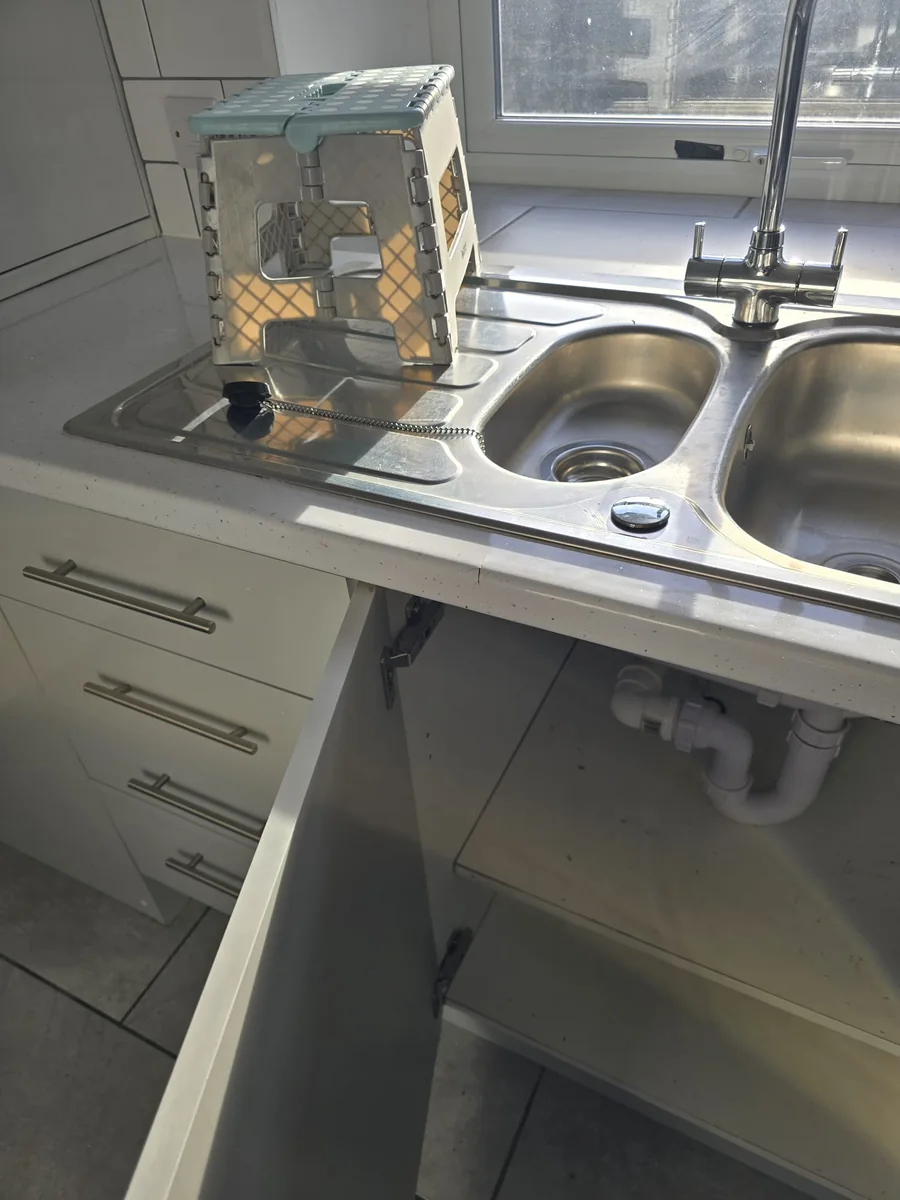
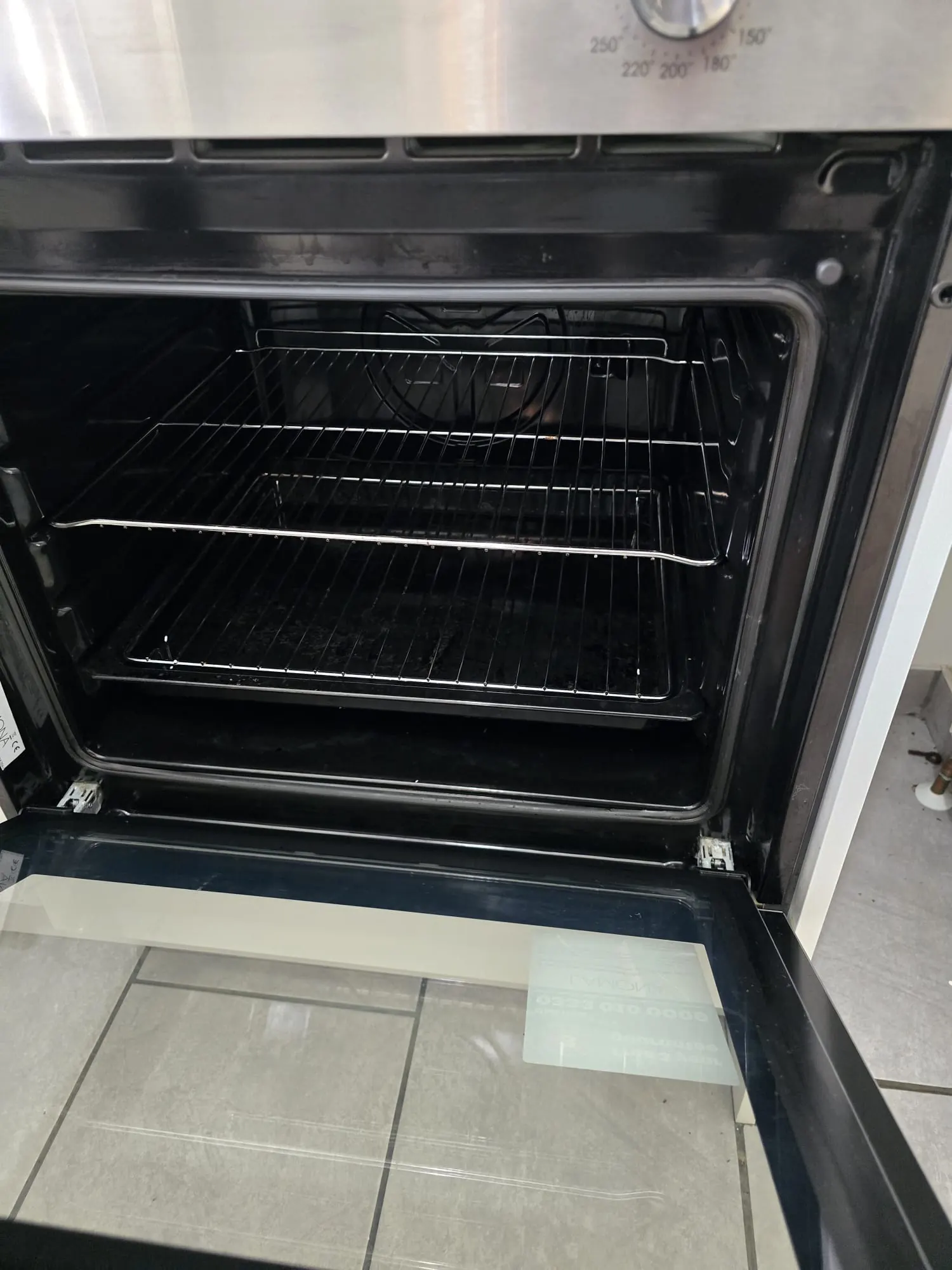
See the full Main Street project for the recorded starting condition and wider sequence. Photographs show cleaning progress; they do not certify appliance operation or safety.
Access behind or beneath appliances
“Behind the appliance” is not automatically an accessible cleaning area. Before movement is authorised, consider whether the appliance is:
- free-standing or integrated;
- connected to gas, fixed wiring, water or drainage;
- stable and safe to move;
- likely to damage flooring, cabinets or connections;
- covered by manufacturer instructions affecting movement.
Integrated appliances should not be assumed to be movable during routine cleaning. No appliance should be disconnected or reconnected unless that task has been expressly agreed and assigned to a person competent and authorised to undertake it.
For combined clearance, repair and cleaning instructions, our void-property cleaning guide explains the sequence.
Preparation before attendance
A clear booking brief should confirm:
- the full property address and postcode;
- property type and whether it is furnished or empty;
- the list of landlord-supplied appliances;
- photographs of significant grease, residue or staining;
- whether appliances have been emptied;
- who is responsible for freezer defrosting;
- the availability of electricity, water and safe lighting;
- key collection, alarm and access arrangements;
- parking or building-access restrictions;
- whether repairs, decorating and clearance are complete;
- whether abandoned belongings or food remain;
- the next deadline, such as inventory, marketing or check-in.
Our coverage information explains the areas served. Work is undertaken across Nottingham and selected nearby areas, with travel and scheduling confirmed from the full postcode. A postcode should therefore be supplied before availability is assumed.
What ordinary cleaning does not establish
Unless separately assessed and agreed, an ordinary kitchen or appliance-cleaning instruction should not be treated as covering:
- gas or electrical repairs;
- appliance testing, certification or servicing;
- dismantling beyond normal user-removable parts;
- movement of integrated, connected or unsafe appliances;
- concealed extractor fans or ductwork;
- plumbing or drainage repairs;
- pest contamination, bodily fluids or suspected hazardous residue;
- removal of appliances, furniture or abandoned possessions;
- correction of HMO amenity or licensing deficiencies.
Government landlord responsibility guidance says landlords must keep rented properties safe and ensure gas and electrical equipment is safely installed and maintained. For landlord-supplied gas equipment, the Health and Safety Executive's landlord guidance explains the requirements for safe maintenance and annual checks by a Gas Safe registered engineer.
A cleaner can record visible concerns, but cleaning is not evidence that electrical or gas equipment is safe.
When the clean reveals another job
Pause or separate the task if inspection reveals:
- a damaged cable, plug or socket;
- signs of scorching or overheating;
- a gas smell;
- a leak or standing water near electrical equipment;
- broken controls, seals, glass or shelves;
- pests, extensive mould or suspected hazardous material;
- an appliance that is unstable or unsafe to access;
- a reported failure to heat, cool, drain or operate correctly.
The issue should be photographed where safe, recorded in neutral terms and referred to the person responsible for deciding the repair or specialist response. Equipment presenting a possible safety concern should not be used merely to test whether it still works.
Cleaning products and ventilation
Oven cleaners, disinfectants and descalers can present chemical risks. The HSE's guidance on the safe use of cleaning substances warns about skin and eye injuries, poor ventilation, application to hot surfaces and harmful gases created by mixing incompatible products.
Products should be used according to their labels and workplace controls. Different cleaning chemicals should not be mixed, and an appliance should not be heated simply to accelerate cleaning unless the product instructions and working procedure expressly permit it.
Nottingham HMOs: cleaning and amenity provision are different issues
Shared HMO kitchens need to be considered alongside the property’s management arrangements and applicable licence conditions. Confirm the requirements for the particular property rather than treating a cleaning instruction as a compliance assessment.
Nottingham City Council's HMO kitchen amenity guidance published in September 2025 covers matters including cooking facilities, sinks, sockets, food storage, refrigeration and refuse containers according to occupancy.
Cleaning cannot correct inadequate cooking provision, insufficient refrigeration, missing sockets or another amenity deficiency. Record these as compliance, repair or property-management matters and check the requirements applying to the particular property and licence.
Food, rubbish and unwanted appliances need authorisation
An instruction to clean an appliance does not automatically authorise the removal of food, tenant belongings or the appliance itself.
The government's waste duty-of-care code explains the responsibilities applying when a business controls or transfers waste. Waste generated when a landlord or letting agent clears a vacated property is not necessarily treated in the same way as a householder's ordinary domestic waste. Refrigeration equipment may also need particular handling.
Before removal, confirm:
- that the landlord or authorised agent has approved it;
- whether an item may still belong to the former tenant;
- who is responsible for the waste;
- the authorised carrier and destination where required;
- what transfer or disposal records must be retained.
Cleaning costs and tenancy deposits
A landlord may commission cleaning to prepare a property, but that does not mean the full cost can automatically be recovered from the outgoing tenant.
The current Tenant Fees Act guidance lists the payments that landlords and agents may require from tenants. A separate compulsory professional-cleaning payment is not included. Consider the applicable tenancy rules alongside the tenancy and deposit evidence; a cleaning invoice does not determine liability.
Where cleaning costs may form part of a deposit proposal, compare the end condition with the documented starting condition. Separate cleaning from damage, wear, repairs and replacement, and retain item-specific photographs and documentation.
For a fuller evidence checklist, see End-of-tenancy cleaning: what gets missed and how to handle deposit disputes fairly.
Use an appliance-by-appliance completion record
A useful completion record can show:
| Appliance or area | Requested | Completed | Excluded or deferred | Separate fault reported |
|---|---|---|---|---|
| Kitchen surfaces and units | ||||
| Oven and grill | ||||
| Hob | ||||
| Extractor | ||||
| Fridge | ||||
| Freezer | ||||
| Microwave | ||||
| Washing machine | ||||
| Dishwasher | ||||
| Other supplied appliance |
Photographs should correspond to the individual items rather than relying only on wide kitchen views. The record should also identify surfaces that could not be accessed safely and faults referred for separate attention.
For repeat or branch instructions, see cleaning for Nottingham landlords and letting agents.
Requesting a kitchen or tenancy-cleaning quote
Send the full postcode, property type, appliance list, access details and required completion date through the enquiry form. Share photographs separately on WhatsApp at 07971 241120, with your name and property postcode. Explain whether the work follows check-out, clearance, repairs or decorating, and identify any known damage or faults separately.
Use the Re-Let contact page to request a maintenance or cleaning quote. The final scope, access arrangements and postcode availability are confirmed before work is scheduled. For starting allowances, see the service menu and guide prices.